Xiamen Tmax Battery Equipments Limited was set up as a manufacturer in 1995, dealing with lithium battery equipments, technology, etc. We have total manufacturing facilities of around 200000 square foot and more than 230 staff. Owning a group of experie-nced engineers and staffs, we can bring you not only reliable products and technology, but also excellent services and real value you will expect and enjoy.
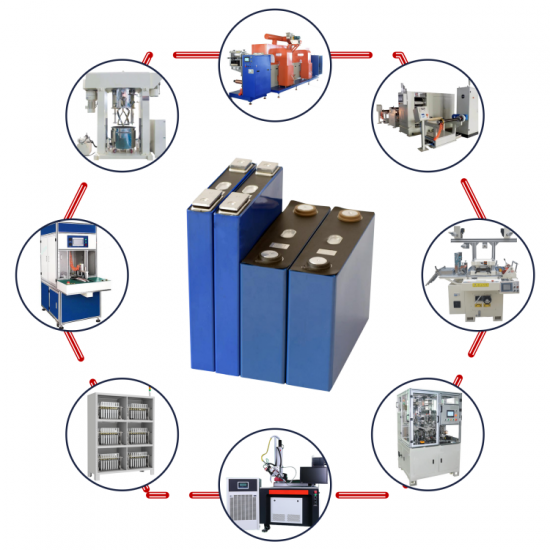
LiFePO4 Prismatic cell production line
Producing LiFePO4 (Lithium Iron Phosphate) prismatic cells involves a specialized production line designed to handle the specific characteristics and requirements of this chemistry, which is known for its safety, long cycle life, and thermal stability. Below is an overview of the key stages and equipment involved in setting up a LiFePO4 prismatic cell production line:
Key Stages of LiFePO4 Prismatic Cell Production
#1. Electrode Preparation
Mixing Systems: Precisely blend LiFePO4 or graphite materials (for cathode and anode respectively), binders, conductive additives, and solvents into uniform slurries. The composition must be carefully controlled to ensure optimal performance.
Coating Machines: Apply these slurries onto metal foils (aluminum for cathodes, copper for anodes) using slotdie coaters or doctor blade systems. The coating process must achieve a uniform thickness across the foil.
Drying Ovens: Remove solvents from coated electrodes under controlled conditions to ensure uniform drying and prevent defects.
Calendering/Rolling Mills: Compress the dried electrode sheets to achieve the desired thickness and density, optimizing electrical performance.
#2. Electrode Cutting and Slitting
Slitting Machines: Cut the coated and dried electrode sheets into precise widths suitable for stacking within prismatic cells.
DieCutting Machines: Further cut the slitted electrode strips into shapes tailored for assembly into prismatic configurations, ensuring alignment and minimizing material waste.
#3. Assembly Line
Stacking Machines: Assemble cathode, anode, and separator layers into stacks rather than winding them. This stacking method is typical for prismatic cells and requires precision to avoid misalignments.
Insertion Tools: Guide the stacked electrode assemblies into prismatic casings. Automated tools may be used depending on the scale of production.
Electrolyte Filling Systems: Use vacuum chambers or automated fillers to inject electrolyte into the casing while maintaining a moisturefree environment, crucial for preventing degradation. Special care should be taken with the electrolyte formulation compatible with LiFePO4 chemistry.
Sealing Machines: Hermetically seal the top cap onto the casing after electrolyte filling, ensuring no leaks occur and providing longterm stability.
#4. Formation and Testing
Formation Chargers/Dischargers: Charge and discharge newly assembled cells under controlled conditions to activate their electrochemical properties and evaluate initial performance metrics.
Battery Cyclers: Perform extensive charge/discharge cycles over time to assess capacity, efficiency, cycle life, and other critical parameters, ensuring reliability. Given LiFePO4's high cycle life, these tests are particularly important.
Impedance Spectroscopy Instruments: Measure internal resistance and other electrical characteristics, aiding in the optimization of cell performance.
Environmental Test Chambers: Simulate various environmental conditions to test thermal stability and safety, including extreme temperatures and humidity levels. LiFePO4 cells are known for their thermal stability, but rigorous testing is still necessary.
Prismatic Cell Production Plant
#5. Quality Control and Safety Testing
Automated Optical Inspection Systems: Check for defects such as misalignments, cracks, or foreign particles, ensuring consistent quality across all cells.
Safety Test Equipment: Conduct tests like overcharge, short circuit, nail penetration, and crush tests to verify the safety of the cells under extreme conditions, protecting endusers. LiFePO4 cells generally have better safety profiles compared to other lithiumion chemistries, but thorough testing remains essential.
Data Management Systems: Track production data, analyze quality control metrics, and manage maintenance schedules to ensure continuous improvement and compliance with industry standards.
Ancillary Equipment and Considerations
Glove Boxes: Controlled environments filled with inert gas (e.g., argon) for handling moisturesensitive materials during processes like electrolyte filling, essential for maintaining cell integrity.
Precision Scales: Highresolution balances for accurately weighing small quantities of materials, critical for consistency and repeatability in production.
Software for Process Monitoring and Control: Facilitates realtime monitoring and adjustments, predictive maintenance, and data analysis to optimize production efficiency and product quality.
Planning and Operational Considerations
Setting up a LiFePO4 prismatic cell production line requires careful planning around several factors:
Facility Layout: Design the layout to optimize workflow, minimize material handling, and ensure safety.
Capacity Planning: Decide on the scale of production based on market demand and financial considerations.
Supply Chain Management: Secure reliable suppliers for raw materials such as LiFePO4/graphite materials, separators, electrolytes, and packaging materials.
Compliance and Certification: Ensure compliance with local and international regulations related to battery manufacturing, environmental protection, and worker safety; obtain necessary certifications such as ISO standards, UN transportation tests for batteries, etc.
Training Programs: Train staff on safety protocols, equipment operation, and process guidelines.
Continuous Improvement: Establish a feedback loop for continuous improvement by analyzing production data, conducting regular audits, and incorporating technological advancements.
By focusing on these aspects, manufacturers can produce highquality LiFePO4 prismatic cells that meet the demanding requirements of modern energy storage applications. This setup not only supports innovation but also ensures scalability and robustness in production, making it possible to efficiently meet the increasing demand for advanced battery technologies with enhanced safety and longevity.



 Поддержка сети IPv6
 ru
ru en
en fr
fr de
de es
es pt
pt ko
ko tr
tr pl
pl th
th


