Xiamen Tmax Battery Equipments Limited was set up as a manufacturer in 1995, dealing with lithium battery equipments, technology, etc. We have total manufacturing facilities of around 200000 square foot and more than 230 staff. Owning a group of experie-nced engineers and staffs, we can bring you not only reliable products and technology, but also excellent services and real value you will expect and enjoy.
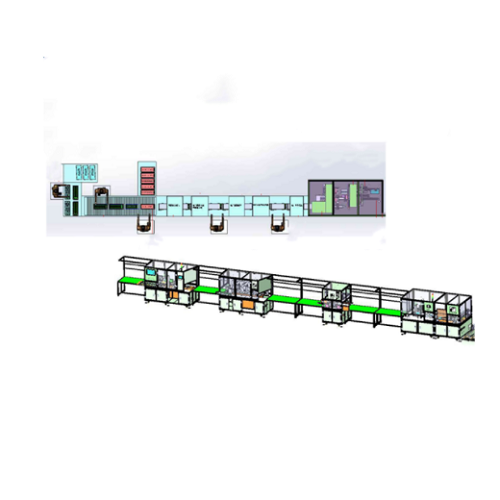
Ebike battery pack assembly involves a series of precise steps and specialized machinery to ensure the batteries are safe, reliable, and perform well. The process includes selecting the right cells, connecting them in the desired configuration (series and/or parallel), adding a Battery Management System (BMS), and encasing everything in a protective housing. Here’s an overview of the types of machines and processes involved in ebike battery pack assembly:
Key Machines and Processes
1. Cell Selection and Testing Equipment
Before assembly, individual battery cells undergo rigorous testing to ensure they meet performance and safety standards. This might include capacity testing, internal resistance measurement, and voltage checks.
Automated systems can sort cells based on these parameters to ensure uniformity within the pack.
2. Welding Machines
Spot Welding: Commonly used for connecting battery cells together. Spot welding creates a strong bond between the tabs of the cells without generating excessive heat that could damage the cells.
Laser Welding: Offers higher precision and less thermal impact compared to spot welding, making it suitable for more compact or highperformance applications.
3. Battery Management System (BMS) Assembly
The BMS is crucial for managing the charging and discharging processes, balancing cell voltages, and providing safety features like overcharge protection.
Specialized equipment may be used to integrate the BMS into the battery pack, ensuring all connections are secure and properly insulated.
Electric Bike Battery Assembly
4. Assembly Line Conveyors
Used to move battery packs through various stages of assembly. These conveyors facilitate efficient handling and allow for automated quality control checks at different points in the production line.
5. Packaging and Enclosure Machines
Once the internal components are assembled, the battery pack needs to be securely enclosed. This may involve custommolded plastic cases or metal housings designed to protect against impacts, moisture, and dust.
Sealing machines might also be employed to ensure the enclosure is watertight, which is particularly important for outdoor use.
6. Testing and Calibration Stations
After assembly, each battery pack undergoes final testing to verify its performance and safety. This includes chargedischarge cycles, insulation tests, and verifying the functionality of the BMS.
Calibration ensures that the BMS readings (such as State of Charge, SoC) are accurate.
7. Labeling and Serialization Equipment
For traceability and compliance with regulations, each battery pack is labeled with relevant information including model number, manufacturing date, serial number, and safety warnings.
Conclusion
The assembly of ebike battery packs requires careful attention to detail and the use of specialized machinery to ensure both performance and safety. From initial cell selection and testing to final packaging and labeling, each step plays a critical role in producing a highquality product. Advances in automation and precision manufacturing technologies continue to improve efficiency and reliability in this field.



 Поддержка сети IPv6
 ru
ru en
en fr
fr de
de es
es pt
pt ko
ko tr
tr pl
pl th
th


